Welcome

Who says we have to suffer...to live a healthy happy vibrant life?

Red wine and dark chocolate... might seem decadent...but these guilty pleasures also might help us live longer...and healthier lives. Red wine and dark chocolate definitely improve an evening..but they also contain resveratrol..which lowers blood sugar. Red wine is a great source of catechins..which boost protective HDL cholesterol. Green tea? Protects your brain..helps you live longer..and soothes your spirit.

Food for Thought, the blog, is about living the good life...a life we create with our thoughts and our choices...and having fun the whole while!

I say lets make the thoughts good ones..and let the choices be healthy...exciting...and delicious! Bon Appetit!

Friday, October 9, 2020

Best pandemic advice: maintain healthy levels of vitamin D!


New research shows insufficient blood levels of vitamin D might heighten people's odds for severe or even fatal COVID-19.

Maintaining a healthy level of vitamin D may "reduce the complications, including the cytokine storm (release of inflammatory proteins into the blood too quickly) and ultimately death from COVID-19," according to the study author Dr. Michael Holick. Dr. Holick is a professor of medicine, physiology, biophysics and molecular medicine at Boston University School of Medicine. 

Vitamin D is called the "sunshine vitamin" because it's produced by a cholesterol compound in the skin when skin is exposed to sunlight. But it can also be sourced through certain foods and supplements. 

The findings build upon those of prior research.

Several studies have found that patients with vitamin D deficiency have a worse outcome in COVID-19. Vitamin D has a beneficial effect on the immune system.

Holick and his colleagues assessed vitamin D levels in blood samples from 235 hospitalized COVID-19 patients. The blood samples were also checked for an inflammatory marker called C-reactive protein and for the number of lymphocytes, (immune cells that fight infections.)

Patients who were vitamin D-sufficient -- a blood level of at least 30 nanograms per milliliter -- had a significantly lower risk for serious complications from COVID-19, including losing consciousness, low blood oxygen levels and death. 

Among patients older than 40, those who were vitamin D-sufficient were also 51.5% less likely to die from COVID-19 compared to those who were vitamin D-deficient or insufficient, the team said. 

The study was published Sept. 25 in the journal PLOS ONE.
A prior study by Holick found that having a sufficient amount of vitamin D might also reduce the risk of becoming infected with the new coronavirus by 54%. Along with reducing the risks associated with the new coronavirus, being vitamin D-sufficient does the same against other viruses that cause upper respiratory tract illnesses, including the flu, according to Holick. 

"There is great concern that the combination of an influenza infection and a coronal viral infection could substantially increase hospitalizations and death due to complications from these viral infections," he said in a university news release. 

All in all, vitamin D could offer a simple and cost-effective way to combat the new coronavirus, Holick believes. "Because vitamin D deficiency and insufficiency is so widespread in children and adults in the United States and worldwide, especially in the winter months, it is prudent for everyone to take a vitamin D supplement to reduce risk of being infected and having complications from COVID-19," he said. 

In people who don't take D, the level is usually low, so it may make sense to take D as a supplement. A blood test will reveal your level of vitamin D. Supplements should be in the most bioavailable form of vitamin D, vitamin D-3. A typical adult dose is 4000 to 5000 iu daily.


Monday, April 20, 2020

Why We Need Immune-Boosting Vitamin D Right Now


Immune-boosting vitamin D3 is extremely important right now. But why stop at vitamin D? I also advise daily doses of vitamin C, magnesium, omega-3s, and NAC.

Here’s why vitamin D3 is at the top of the list. It plays a central role in supporting our immune system, making all of our immune cells more toxic against invading pathogens. Our white blood cells make chemicals called cytotoxins. These frontline immune cells engulf bacteria or viruses and use those cytotoxins to kill the invaders. 

The role of vitamin D is this: cytotoxins are more lethal to pathogens when vitamin D levels are higher. Vitamin D also facilitates the maturation of monocytes (juvenile white blood cells) into macrophages (the white blood cells that gobble up pathogens and then destroy them).

Vitamin D3 also promotes our body’s production of cathelicidins and defensins, antimicrobial immune warriors that help keep our lungs safe from viral and bacterial infections. Cathelicidin overpowers respiratory viruses like influenza A, which may explain the seasonal fluctuation in influenza that follows the seasonal strength of sunlight, our native source of vitamin D. Cathelicidin also defeats the tuberculosis bacterium which may explain why, in earlier times, people who had tuberculosis were sent to sunnier climates and their health improved.
We are facing a pandemic now, involving a novel coronavirus that attacks the lungs and sometimes leads to severe pneumonia or even acute respiratory distress syndrome in a minority of vulnerable persons. For some, the infection is mild, for others it can be fatal. 
While there have not yet been studies using vitamin D against this coronavirus, there is reason to be positive about the protection vitamin D might offer. Previous studies have shown us that through multiple mechanisms, vitamin D can reduce the risk of infections. Those mechanisms include inducing the previously mentioned cathelicidins and defensins. They can lower viral replication rates and reduce concentrations of pro-inflammatory cytokines (chemicals produced by our cells) that produce the inflammation that injures the lining of the lungs, leading to pneumonia. 
Cathelicidins and defensins also increase concentrations of anti-inflammatory cytokines. Since one of the observations in the current pandemic is of overactive immune responses, described as “cytokine storms,” vitamin D’s ability to calm the storm and return the immune response to balance may prove to be crucial.
Experts such as members of the Vitamin D Council suggest that during the next several months to possibly years, we should strive to get our serum vitamin D levels to a target of 40-60 ng/mL. Normal 25OH D levels range between 30 ng/mL and 100 ng/mL.
On average, adults need a daily intake of 5,000-10,000 IU of vitamin D3 to achieve a serum level in the midrange of normal, or 40-60 ng/mL
Please note magnesium supplementation is recommended when taking vitamin D supplements. Magnesium helps activate vitamin D, which in turn helps regulate calcium and phosphate homeostasis to influence the growth and maintenance of bones. All of the enzymes that metabolize vitamin D seem to require magnesium, which acts as a cofactor in the enzymatic reactions in the liver and kidneys. The dose of magnesium should be in the range of 250–500 mg/d, along with twice that dose of calcium. 

Monday, April 13, 2020

In the Age of Coronavirus Induced Covid 19 Pay attention to Your Vitamin D Levels

An important review of vitamin D and respiratory health was published April 2 in the Journal Nutrients. Here is the abstract followed by the link to the full paper. Be certain you are getting enough vitamin D to support robust lung health.

Evidence that Vitamin D Supplementation Could Reduce Risk of Influenza and COVID-19 Infections and Deaths
Nutrients 2020, 12(4), 988; https://doi.org/10.3390/nu12040988

Abstract: The world is in the grip of the COVID-19 pandemic. Public health measures that can reduce the risk of infection and death in addition to quarantines are desperately needed. This article reviews the roles of vitamin D in reducing the risk of respiratory tract infections, knowledge about the epidemiology of influenza and COVID-19, and how vitamin D supplementation might be a useful measure to reduce risk. Through several mechanisms, vitamin D can reduce risk of infections. Those mechanisms include inducing cathelicidins and defensins that can lower viral replication rates and reducing concentrations of pro-inflammatory cytokines that produce the inflammation that injures the lining of the lungs, leading to pneumonia, as well as increasing concentrations of anti-inflammatory cytokines. Several observational studies and clinical trials reported that vitamin D supplementation reduced the risk of influenza, whereas others did not. Evidence supporting the role of vitamin D in reducing risk of COVID-19 includes that the outbreak occurred in winter, a time when 25-hydroxyvitamin D (25(OH)D) concentrations are lowest; that the number of cases in the Southern Hemisphere near the end of summer are low; that vitamin D deficiency has been found to contribute to acute respiratory distress syndrome; and that case-fatality rates increase with age and with chronic disease comorbidity, both of which are associated with lower 25(OH)D concentration. To reduce the risk of infection, it is recommended that people at risk of influenza and/or COVID-19 consider taking 10,000 IU/d of vitamin D3 for a few weeks to rapidly raise 25(OH)D concentrations, followed by 5000 IU/d. The goal should be to raise 25(OH)D concentrations above 40–60 ng/mL (100–150 nmol/L). For treatment of people who become infected with COVID-19, higher vitamin D3 doses might be useful. Randomized controlled trials and large population studies should be conducted to evaluate these recommendations.

https://www.preprints.org/manuscript/202003.0235/v2


Friday, February 1, 2019

Do you need a multi-vitamin? The odds are you do.

Here is a quick look at the percent of the US population that does NOT meet the minimum intake of these nutrients on a daily basis. This is why a good multi-vitamin is the foundation of any well designed supplement program.


Monday, November 12, 2018

How Inactivity Harms Your Health

I came across this nifty diagram showing how being inactive contributes to illness. Get moving to stay healthy! When you don't move you gain weight, especially around the middle. White blood cells from your immune system move into the fat around your organs. This ignites inflammation everywhere in your body, which leads to insulin resistance and more weight gain, and ultimately diabetes. This raises your risk for heart disease, high blood pressure and stroke. This inflammation also leads to brain issues like dementia, Parkinsons and Alzheimers. Also increased is your risk for cancer. It is worth saying again. Get moving to protect your health!


Thursday, May 31, 2018

Is vitamin C deficiency related to decreased cognitive function? It may be!


There are numerous causes and consequences of Vitamin C deficiency in the brain. 

Several risk factors for Vitamin C deficiency have been identified, including disease, smoking, and inadequate dietary intake, but also pregnancy and genetics have been shown to affect Vitamin C levels. Based on Vitamin C’s involvement in important processes in the brain, there is reason to believe that these could be adversely affected by a deficiency. The functions of Vitamin C include its antioxidant function of upholding redox balance, and thus reducing the effects of oxidative stress in the brain. But vitamin C also has other important functions in the brain. These include modulation of the cholinergic, catecholinergic, and glutamergic systems of the brain. Vitamin C supports the general development of neurons ( nerve cells in the brain) through maturation, differentiation and myelin formation. Vitamin C is involved in several processes in the vascular system including helping maintain integrity and function of blood vessels, e.g., nitric oxide synthase, which regulates vessel relaxation through production of nitric oxide. 

Abbreviations: NOS, nitric oxide synthase; ROS, reactive oxygen species; NMDA, N-methyl-d-aspartate.

Vitamin C deficiency appears to pose numerous threats to cognitive function. The involvement of vitamin C in vessel integrity, antioxidant balance and neuromodulation in the brain has prompted investigations into the effect of the vitamin on the developing brain, in aging and in stroke. In the developing brain, neuronal density and maturation is compromised by Vitamin C deficiency, giving rise to decreased brain volume. In the aging brain deficiency affects ACh release and may impair cognitive function through reduced signal transduction but also through amyloid β deposition resulting in generation of reactive oxygen species and increased neuronal impairment in people suffering from Alzheimer’s disease. In stroke, Vitamin C deficiency may result in decreased vessel integrity through decreased nitric oxide synthase generation and impaired synthesis of mature collagen; potentially leading to increased plaque formation and incidence of stroke. Furthermore, an increase in infarct area may result from oxidative damage causing increased neuronal death.

Wednesday, May 30, 2018

Iron supports a healthy immune system.


Iron is important for immune function yet it is one of the most common nutrient deficiencies. Here are many reasons why you should check iron levels at your next checkup.
Iron plays an essential role in normal development of the immune system and resistance to infection. Impaired immunocompetence is associated with iron deficiency.  Ref. Ref. 
Iron is  necessary for immune cell production, cytokine production, ref, immune response 
  and the generation of reactive oxygen species required for killing pathogens. Ref Ref
Iron deficiency is associated with some reduced function of lymphoid organs (tissues that produce lymphocytes) and immune cells, specifically thymus degeneration, resulting in a decrease of T cells. Ref.
Iron deficiency is associated with reduced neutrophil activity against bacteria. Myeloperoxidase, an enzyme in neutrophils required for killing bacteria, needs iron to function. Ref. 
Neutrophil function is restored to normal with iron supplementation. Ref. Ref.
Low iron is linked to changes in immune responses that reduce the ability to fight off viral and bacterial infections. Ref.
Iron deficiency is associated with impairments in cell mediated immunity and innate immunity and may render older adults more vulnerable to infections. Ref.


Tuesday, May 29, 2018

A dozen reasons why iron is so important for women of childbearing age.


Iron deficiency is one of the leading risk factors for disability and death worldwide, affecting an estimated 2 billion people. Reference Reference
Women of childbearing age are prone to iron deficiency. Reference Reference
A low intake of iron is associated with a higher risk of premenstrual syndrome. Reference
PMS Symptoms are more severe in anemic women comparing to non-anemic women. Reference
Taking dietary and iron supplements for 2 months reduced PMS symptoms considerably in all women having anemia. Reference
Eating a diet that provided about 22 mg of iron every day for 10 years was linked to a 33% decrease in risks of developing premenstrual syndrome. Reference
Iron Deficiency is Linked to Pregnancy Complications Reference Reference
Apgar (Appearance, Pulse, Grimace, Activity, Respiration) scores, that assess the health of newborn infants, are significantly higher in children born to mothers who took iron supplements. Reference
Low Hemoglobin Level Is a Risk Factor for Postpartum Depression. Reference
Postpartum anemia is associated with an impaired quality of life, reduced cognitive abilities, emotional instability, and depression and constitutes a significant health problem in women of reproductive age.
A decrease in maternal hemoglobin levels causes immunological and nutritional alterations in breast milk. Reference

Anemia is linked to insufficient breast milk. Reference


14 Reasons Babies' and Children's Brains Need iron.

Iron status should be measured during pregnancy, infancy and childhood because iron is needed for brain health, brain function and brain development in children. Iron rich foods include beef or chicken liver, scallops, oysters, beef, sardines, chicken, turkey, halibut, haddock, salmon, tuna, pork, veal, fortified cereals, beans, tofu, pumpkin sesame or squash seeds, apricots, wheat germ, broccoli and spinach. Here are the reasons to pay attention to iron status in kids.


Iron is necessary for brain development. Study
Iron is necessary for normal brain function. Study
Hippocampal structure requires iron. Study
Iron is needed for myelination and memory function. Study
Low iron and ferritin levels are associated with ADHD, the severity of ADHD symptoms and cognitive deficit. Study 1 Study 2
Low iron levels in the brain alter dopamine function, involved in movement, cognitive function and attention. Study
Treatment with iron supplements may improve ADHD in children with low ferritin levels. Study Study
Iron deficiency is linked to autism. Study Study
Iron deficiency is linked to autism and Asperger’s syndrome. Study
The risk for autism spectrum disorder increases with low maternal iron. Study
Children who have iron-deficiency anemia in infancy are at risk for long-lasting developmental disadvantage. Study
Children who had severe, chronic iron deficiency in infancy scored lower on measures of mental and motor functioning at age 10 Study
There is an association between psychiatric disorders and iron deficiency anemia among children and adolescents. Study
Children with iron deficiency had greater than twice the risk of scoring below average in math than did children with normal iron status. Study

Thursday, March 1, 2018

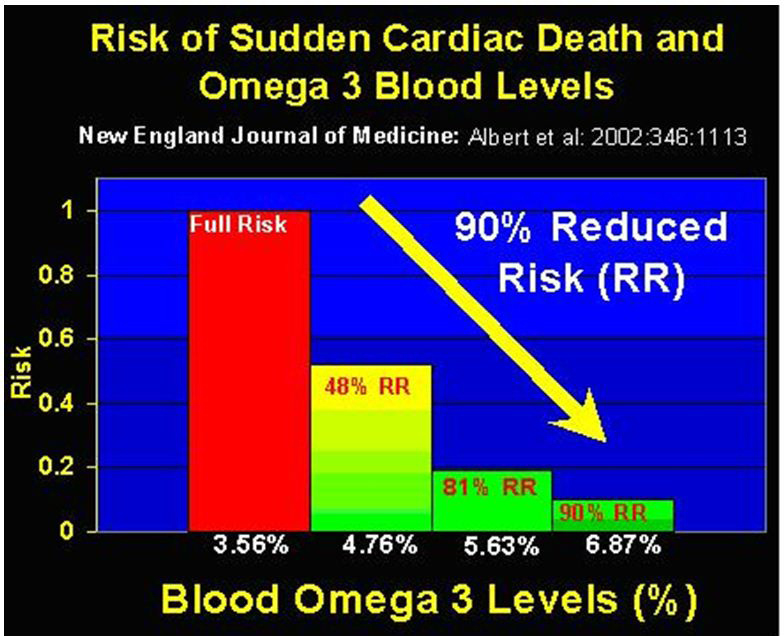
Take your fish oils! To get to a target level you need 1500 to 2000 mg of EPA+DHA daily.

It takes 4 months to raise your Omega-3 Index levels when you begin to increase your dose of EPA and DHA. Shoot for 1500 to 2000 mg of EPA + DHA daily. The image below says it all.

Wednesday, January 31, 2018

Vitamin D3 could heal and protect your heart.


A study has been published in the International Journal of Nanomedicine. It shows that Vitamin D3 -- which is made by the body naturally when skin is exposed to the sun -- can significantly restore the damage to the cardiovascular system caused by several diseases, including hypertension, diabetes and atherosclerosis. Vitamin D3 supplements are also available over-the-counter.

Generally, Vitamin D3 is associated with the bones. However, in recent years, in clinical settings people recognize that many patients who have a heart attack will have a deficiency of D3. It doesn't mean that the deficiency caused the heart attack, but it increased the risk of heart attack.  A research team used nanosensors to see why Vitamin D3 can be beneficial, especially for the function and restoration of the cardiovascular system.

The Ohio University team has developed unique methods and systems of measurements using nanosensors, which are about 1,000 times smaller in diameter than a human hair, to track the impacts of Vitamin D3 on single endothelial cells, a vital regulatory component of the cardiovascular system. A major discovery from these studies is that vitamin D3 is a powerful stimulator of nitric oxide (NO), which is a major signaling molecule in the regulation of blood flow and the prevention of the formation of clots in the cardiovasculature. Additionally, vitamin D3 significantly reduced the level of oxidative stress in the cardiovascular system.
Most importantly, these studies show that treatment with vitamin D3 can significantly restore the damage to the cardiovascular system caused by several diseases, including hypertension, atherosclerosis, and diabetes, while also reducing the risk of heart attack. These studies, performed on cells from Caucasian Americans and African Americans, yielded similar results for both ethnic groups.
There are not many, if any, known systems which can be used to restore cardiovascular endothelial cells which are already damaged, and Vitamin D3 can do it. "This is a very inexpensive solution to repair the cardiovascular system. We don't have to develop a new drug. We already have it."
These studies, performed at Ohio University, are the first to identify the molecular mechanism of vitamin D3-triggered restoration of the function of damaged endothelium in the cardiovasculature. While these studies were performed using a cellular model of hypertension, the implication of vitamin D3 on dysfunctional endothelium is much broader. The dysfunction of endothelium is a common denominator of several cardiovascular diseases, particularly those associated with ischemic events.
Therefore, the authors suggest that vitamin D3 may be of clinical importance in the restoration of dysfunctional cardiac endothelium after heart attack, capillary endothelium after brain ischemia (stroke), hypovolemia, vasculopathy, diabetes and atherosclerosis. This suggestion is strongly supported by several clinical studies which indicate that vitamin D3 at doses higher than those currently used for the treatment of bone diseases, may be highly beneficial for the treatment of the dysfunctional cardiovascular system.


Friday, November 10, 2017

Antioxidant rich diet linked to lower diabetes risk in women.

Consuming a diet rich in antioxidant foods is associated with a reduction in risk of type-2 diabetes (T2D) in middle-aged women, according to a new study in the journal Diabetologia.

Women with the highest quintile of dietary antioxidant intake, measured by total antioxidant capacity (TOC), reduced their risk of T2D by 27 %.
Total antioxidant capacity (TOC) is an index which estimates the aggregated antioxidant capacity from the sum of all the individual antioxidant components in the diet.

The development of T2D may involve oxidative stress, recent evidence has suggested. A diet containing fruit, vegetables and beverages including tea contains a variety of compounds with antioxidative properties. In this study, “the food groups that contributed the most to the TOC were fruit (23%), vegetables (19%), alcoholic beverages (15%) and hot beverages such as tea, chicory and hot chocolate (12%).

Friday, October 13, 2017

Teens with the hearts of old men. A cautionary tale.


Kale, parsley, broccoli, and spinach: according to new research, these leafy green vegetables may hold even more health benefits than previously thought, as vitamin K - found in abundance in all four - may contribute to a healthy heart.
A new study published in The Journal of Nutrition examines the link between vitamin K levels and heart structure and functioning in young people.
Vitamin K plays a key role in blood coagulation and bone health. Deficient levels of the vitamin raise the risk of hemorrhage, osteoporosis, and bone fractures.

In its dietary form, vitamin K is known as phylloquinone, or vitamin K-1. This is abundantly found in leafy green vegetables such as kale, parsley, broccoli, spinach, iceberg lettuce, and cabbage.
The new research suggests that insufficient levels of the vitamin may affect the structure of the heart, leading to a condition called left ventricular hypertrophy (LVH).
The left ventricle is the heart's major pumping chamber, and in LVH, this chamber is enlarged to an unhealthy degree. As the authors of the new study explain, a larger heart can malfunction with time, becoming less effective at pumping blood.
LVH tends to affect adults, but the researchers decided to study this heart structure in young people because cardiac abnormalities that begin in childhood tend to predict the risk of cardiovascular disease in adulthood. They found that teens with the lowest intake of vitamin K1 from foods had triple the rate of LVH of their counterparts who had the highest intake.
Your mom was right…eat your greens.