Welcome
Who says we have to suffer...to live a healthy happy vibrant life?
Red wine and dark chocolate... might seem decadent...but these guilty pleasures also might help us live longer...and healthier lives. Red wine and dark chocolate definitely improve an evening..but they also contain resveratrol..which lowers blood sugar. Red wine is a great source of catechins..which boost protective HDL cholesterol. Green tea? Protects your brain..helps you live longer..and soothes your spirit.
Food for Thought, the blog, is about living the good life...a life we create with our thoughts and our choices...and having fun the whole while!
I say lets make the thoughts good ones..and let the choices be healthy...exciting...and delicious! Bon Appetit!
Monday, April 18, 2011
Denver Wines...
You might not think of Denver or Colorado as wine country...but it is! My favorite? Balistreri Vineyards right here in Denver.
Visit their website here. The 2008 Little Feet Merlot is big and bold, maybe my favorite merlot ever... and the 2008 Petite Sirah is another personal favorite.
Friday, April 15, 2011
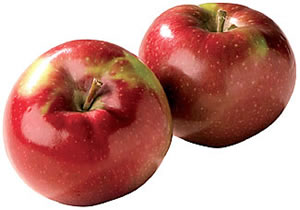
An Apple a Day May Keep Heart Disease Away!
Amazing news was presented this week at the Experimental Biology Meeting in Washington D.C. Older women who consumed apples everyday were found to have an average of 23% reduced LDL cholesterol levels within six months and a 4% increase in HDL cholesterol.
The scientists came away with the impression that apples are a miracle fruit. Its no miracle...pectin and polyphenols, two substances found in apples, enhance lipid metabolism and reduce the production of molecules that cause inflammation.
160 females aged 45-65 years were randomly selected to receive either 75 grams of dried apples daily or dried prunes daily for a whole year. Their blood was examined in a laboratory at months 3, 6 and 12.
Incredible changes occurred in the apple-eating women. Not only did their cholesterol levels improve, they also had reduced levels of lipid peroxidation, a marker of oxidative stress, and they had reduced levels of the inflammatory molecule C- Reactive protein.
It all adds up to less heart risk....
And the icing on the cake? Even though eating the apples added 240 extra calories to their day...the women did not gain weight..they lost an average of 3.3 pounds. Pectin, which makes you feel full..may be a factor in the weight loss.
Monday, April 11, 2011
Telomeres: Omega-3s and Slowing the Aging Process
Major Research: 65% Decrease in Biological Aging
Telomeres are the protective caps at the ends of chromosomes. Each time a cell divides, its telomeres shrink. So shorter telomeres are a sign that your cells are getting old. They're also linked to a higher risk of heart disease.
Between 2000 and 2002, researchers measured the length of telomeres in the white blood cells of roughly 600 San Francisco Bay-area residents with heart disease. Five years later, those who started out with the highest blood levels of DHA and EPA had the least telomere shortening, while those who started out with the lowest levels had the most shortening. The results were not influenced by income, education, blood pressure, weight, cholesterol, smoking, statins, vitamins, exercise, or other factors.
If you or your family has a history heart disease, follow the American Heart Association's advice to take a daily fish oil supplement that provides 1,000 mg of DHA plus EPA, combined.
Blueberries can help you burn fat!
The benefits of blueberry consumption have been noted in several nutrition studies, an example being the cardio-protective benefits derived from the high polyphenol content in blueberries. Studies looking at the protective nature of blueberries have shown potential to have a positive effect on everything from aging to metabolic syndrome, to loss of brain mass.Plant polyphenols have been shown to fight adipogenesis, which is the development of fat cells, and induce lipolysis, which is the breakdown of lipids and or fat.
In mice, the highest dose of blueberry polyphenols yielded a 73% decrease in lipids; the lowest dose showed a 27% decrease.
Studies will now be done with humans..but I’m not waiting…since we already know they protect the brain from shrinking and give us better night vision…I’m having blueberries today!
Green Tea and Tai Chi Enhance Bone Health and Reduce Inflammation in Postmenopausal Women
Green tea, historically consumed in the Orient and now an international mainstay, is chock full of compounds called polyphenols known for their potent antioxidant activity. Dozens of epidemiological (observational) studies have shown that people who consume the highest levels of green tea polyphenols (GTP) tend to have lower risks of several chronic degenerative diseases such as cardiovascular disease and osteoporosis.
A new study found that consumption of Green Tea Polyphenols (at a level equivalent to about 4-6 cups of steeped green tea daily) and participation in tai chi independently enhanced markers of bone health by 3 and 6 months, respectively. A similar effect was found for muscle strength at the 6-month time point. Women taking tai chi classes also reported significant beneficial effects in quality of life in terms of improving their emotional and mental health. Perhaps most remarkable, however, was the substantial effect that both GTP and tai chi had on biological markers of oxidative stress. Because oxidative stress is a main precursor to inflammation, this finding suggests that green tea and tai chi may help reduce the underlying etiology of not only osteoporosis, but other inflammatory diseases as well.Friday, April 8, 2011
Food for Thought...dark chocolate lowers blood pressure! mmmm....
The next time you crave chocolate, give in. Besides lifting your mood, the flavonols in dark chocolate may protect against high blood pressure and stroke, in part by improving the elasticity of your blood vessels.
When choosing chocolate, go as dark as your taste buds can stand. Check labels for the percentage of cacao, which is the source of all that antioxidant goodness. Dark chocolate typically ranges from 60 percent to 80 percent cacao. Note.. eat a square or two, not the whole bar.
begins to define the internal,
instead of the internal
defining the external,
one begins living as a mortal
rather than as a god.
Trust me, as a “god” is better.
Zing,
The Universe”
| — | www.tut.com |
Tuesday, April 5, 2011
Our Big Pig Problem!
For more than 50 years microbiologists have warned against using antibiotics to fatten up farm animals. The practice, they argue, threatens human health by turning farms into breeding grounds of drug-resistant bacteria. Farmers responded that restricting antibiotics in livestock would devastate the industry and significantly raise costs to consumers. We now have empirical data that should resolve this debate. Since 1995 Denmark has enforced progressively tighter rules on the use of antibiotics in the raising of pigs, poultry and other livestock. In the process, it has shown that it is possible to protect human health without hurting farmers.
Get cold sores? Treat them quickly!
Researchers Link Herpes to Alzheimer’s Disease; “Cold Sores” Connected to Cognitive Decline.
Researchers recommend people treat a cold sore as quickly as possible to minimize the amount of time the virus is actively traveling through a person’s nervous system. The faster a cold sore is treated, the faster the HSV1 returns to a dormant stage.
How prevalent is this virus? In developed countries such as the U.S., approximately 20 percent of children are infected with HSV1 prior to the age of five. By the second and third decades of life, as much as 60 percent of the population is infected, and late-in-life infection rate reaches 85 percent.
Here's the journal article:
Herpes Simplex Virus Dances with Amyloid Precursor Protein while Exiting the Cell.
Zovirax or acyclovir is an antiviral drug that slows the growth and spread of the herpes virus so that the body can fight off the infection. Zovirax contains an active antiviral ingredient called acyclovir. Acyclovir stops the herpes virus from spreading from one host cell to other normal cells. Acyclovir converts itself into a more active agent inside the infected cells of the body. Then, it blocks the action of an enzyme called DNA polymerase which copies the herpes virus’ genetic material from RNA to DNA. By blocking DNA polymerase, Zovirax prevents the multiplication and growth of the herpes virus. This allows the body to treat the existing outbreak and relieve the pain caused by cold sores.Monday, March 28, 2011
Tell the E.P.A.: Ban the pesticide that's killing honey bees.
Since 2006, U.S. honey bee populations have been in precipitous decline, with some estimates suggesting losses as high as 30% per year. While that's terrible, the problem is far greater than just the destruction of a species. Without bees, a big piece of our food supply is in serious danger. Pollination by honey bees is key in cultivating the crops that produce a full one-third of our food.Scientists have been scrambling to understand the crisis -- termed Colony Collapse Disorder -- but have yet to find a single, definitive cause. There are likely multiple interacting causes, and mounting evidence suggests that one widely used class of pesticides may be a critical factor.
One such chemical, called clothianidin, was quietly granted approval by the EPA whist no major independent study has verified the safety of its use. It has been used on our corn crops since 2003. And it was officially approved by the Environmental Protection Agency last year on the basis of a single study, conducted by the company that manufactures it.
It is outrageous that the E.P.A. is putting a vital species, the livelihoods of farmers and beekeepers, and our very food supply at risk.
Read more and sign the petition to the EPA here.
Walnuts are best for a healthy heart!
A new study has suggested that walnuts have a combination of more healthful antioxidants and higher quality antioxidants than any other nut. The report was presented at the 241st National Meeting and Exposition of the American Chemical Society.
What Would the World Look Like if We Relied on Industrial Agriculture to Feed Everyone?
On March 8, Dr. Olivier De Schutter, the United Nations Special Rapporteur on the right to food, released a report arguing that the use of small-scale, diverse farming methods, which he calls “agroecology,” can double agricultural production in poverty-stricken areas, increase the economic prospects of the inhabitants, and improve their local environment.
Read the whole article here...
More evidence: Eating fish ( and taking marine omega 3's) protects your brain.
Temple University scientists have discovered that blocking activity of an enzyme in the brain protects the brain. DHA and EPA from fish block that enzyme. Take your DHA and EPA everyday!
In previous studies, the Temple researchers discovered that 5-lipoxygenase, an enzyme long known to exist in the brain, controls the activation state of gamma secretase, another enzyme that is necessary and responsible for the final production of amyloid beta. When produced in excess, amyloid beta causes neuronal death and forms plaques in the brain. The amount of these amyloid plaques in the brain is used as a measurement of the severity of Alzheimer's.
The researchers published their findings, “Pharmacologic Blockade of 5-Lipoxygenase Improves the Amyloidotic Phenotype of an AD Transgenic Mouse Model,” in the American Journal of Pathology.
Saturday, March 26, 2011
What's Cooking?
- 12 Ounces Chunk Light Tuna, flaked
- 8 oz chopped canned artichoke hearts
- 1/2 cup chopped black olives
- 1/2 cup dried cranberries
- 1/3 cup mayonnaise
- 2 tablespoons lemon juice
- 1 teaspoon lemon zest
- 1 tsp chopped fresh oregano
Combine tuna, artichokes, olives, mayonnaise, lemon juice, lemon zest and oregano in a medium bowl.
Hint: I use chunk light tuna instead of white tuna because it comes from smaller fish and has significantly less mercury.
Red grapes cut in half are really good in this salad too. If you are trying to lighten up..serve it on lettuce leaves rather than slices bread.
Friday, March 25, 2011
What's Cooking?
Fruit Salad for Lunch
I'm in a mood to lighten up so this weekend I'm doing fruits and veggies. I'm home alone..can cook or not as it moves me...so here's my hopeful little nod toward warmer weather approaching.
Of course it is loaded with vitamin C.
Strawberries and Kiwi fruit were both on sale today...and this will surely be even more delicious in summer when the Rocky Ford melons are in...
Blackberries or raspberries would be nice in here too!
Of course it is loaded with vitamin C.
Strawberries and Kiwi fruit were both on sale today...and this will surely be even more delicious in summer when the Rocky Ford melons are in...
Blackberries or raspberries would be nice in here too!
Salad:
• Half a small cantaloupe cut into 3/4- inch chunks (about 2 cups)
• 1 (16 ounce) container strawberries, quartered (about 3 cups)
• 5 medium kiwis, peeled and cut into 3/4-inch chunks (about 2 1/2 cups)
Dressing:
• 3 tablespoons honey
• 3 tablespoons fresh lime juice
• 1 teaspoon lime zest
• garnish with fresh herb sprinkle...basil or whatever moves you...
Directions
Place all of the fruit into a large bowl. In a small bowl, whisk the honey, lime juice, zest, and mint. Right before serving, pour the dressing over the fruit and toss gently to combine.
Wednesday, March 23, 2011
The Mind Blowing Relationship of Breast Cancer Incidence and Vitamin D Serum Levels
This is why I go on so much about the importance of knowing one's vitamin D levels. I saw Dr Cedric Garland present this slide at a vitamin D symposium in Canada a couple of years ago. As this slide came up he was saying..."the trend was so linear that they ( the researchers) had never seen breast cancer in a woman with a serum level of 70ng/ml." That statement had a profound impact on me...and in that exact moment I made it my goal to have my levels and the levels of every woman in my family be at or higher than 70ng/ml.
![]() |
| click graph to enlarge |
Data from: Lowe LC, et al. Plasma 25-hydroxy vitamin D concentrations, vitamin D receptor genotype and breast cancer risk in a UK Caucasian population. Eur J Cancer. 2005;41:1164-9.
Great News!
![]() |
| Click on image to enlarge |
There are now more than 6,000 farmers markets nationwide (Source: www.ams.usda.gov)— about a 250 percent increase since 1994. They’re searchable too, thanks to the USDA.
And increasing efforts are being made to get that food to the people who really need it: Wholesome Wave, for example, began a voucher program in 2008 that doubles the value of federal food stamps (SNAP) at participating farmers markets; that program has grown more than tenfold in less than three years. (http://wholesomewave.org/what-we-do/double-value-coupon-program/)
Tuesday, March 22, 2011
More than just your eyesight...vitamin A supports gene expression...
Study Indicates Vitamin A Plays Key Role in the Human Body
More direct role for Vitamin A than previously believed in sperm cell production, development of central nervous system, and other vital physiological functions.
The study provided evidence to show that Vitamin A, or retinol, the most common dietary form of the vitamin and the parental compound of the retinoid group, is directly involved in nuclear receptor signaling pathways -- a process which activates genes in the human body.
Van Andel Research Institute (2011, March 18). Vitamin A plays key role in the human body, study suggests. ScienceDaily. Retrieved March 22, 2011, from http://www.sciencedaily.com /releases/2011/03/110317131038.htm
Experts say...get moving and stay alive!
Here's another great reason to make exercise part of your routine…slashing the risk of colorectal cancer. Colon and rectal cancers are among the most prevalent cancers in the US. These cancers are more common in people whose diets are high in fat and low in fiber. A recent study of over 150,000 men and women examined the effect of consistent exercise on the risk of dying from colon cancer. Over a ten year follow-up period, it was found that those who exercised consistently for at least ten years had the lowest risk of colon cancer death. It was also found that being physically active even after the diagnosis can reduce the risk of recurrence and death! These findings highlight the importance of lifelong physical activity to reduce the risk of colon cancer.
Wolin KY, Patel AV, Campbell PT, et al. Change in physical activity and colon cancer incidence and mortality. Cancer Epidemiol Biomarkers Prev. Dec2010;19(12):3000-4.
Subscribe to:
Posts (Atom)