Welcome

Who says we have to suffer...to live a healthy happy vibrant life?

Red wine and dark chocolate... might seem decadent...but these guilty pleasures also might help us live longer...and healthier lives. Red wine and dark chocolate definitely improve an evening..but they also contain resveratrol..which lowers blood sugar. Red wine is a great source of catechins..which boost protective HDL cholesterol. Green tea? Protects your brain..helps you live longer..and soothes your spirit.

Food for Thought, the blog, is about living the good life...a life we create with our thoughts and our choices...and having fun the whole while!

I say lets make the thoughts good ones..and let the choices be healthy...exciting...and delicious! Bon Appetit!

Friday, April 8, 2011

Food for Thought...dark chocolate lowers blood pressure! mmmm....

The next time you crave chocolate, give in. Besides lifting your mood, the flavonols in dark chocolate may protect against high blood pressure and stroke, in part by improving the elasticity of your blood vessels.


When choosing chocolate, go as dark as your taste buds can stand. Check labels for the percentage of cacao, which is the source of all that antioxidant goodness. Dark chocolate typically ranges from 60 percent to 80 percent cacao. Note.. eat a square or two, not the whole bar.

When the external

begins to define the internal,
instead of the internal
defining the external,
one begins living as a mortal
rather than as a god.
Trust me, as a “god” is better.

Zing,
The Universe
www.tut.com

Tuesday, April 5, 2011

Our Big Pig Problem!


The U.S. should follow Denmark and stop giving farm animals low-dose antibiotics.
For more than 50 years microbiologists have warned against using antibiotics to fatten up farm animals. The practice, they argue, threatens human health by turning farms into breeding grounds of drug-resistant bacteria. Farmers responded that restricting antibiotics in livestock would devastate the industry and significantly raise costs to consumers. We now have empirical data that should resolve this debate. Since 1995 Denmark has enforced progressively tighter rules on the use of antibiotics in the raising of pigs, poultry and other livestock. In the process, it has shown that it is possible to protect human health without hurting farmers.


Get cold sores? Treat them quickly!


Researchers Link Herpes to Alzheimer’s Disease; “Cold Sores” Connected to Cognitive Decline.
Researchers recommend people treat a cold sore as quickly as possible to minimize the amount of time the virus is actively traveling through a person’s nervous system. The faster a cold sore is treated, the faster the HSV1 returns to a dormant stage.

How prevalent is this virus? In developed countries such as the U.S., approximately 20 percent of children are infected with HSV1 prior to the age of five. By the second and third decades of life, as much as 60 percent of the population is infected, and late-in-life infection rate reaches 85 percent.
Here's the journal article:
Herpes Simplex Virus Dances with Amyloid Precursor Protein while Exiting the Cell.

Zovirax or acyclovir is an antiviral drug that slows the growth and spread of the herpes virus so that the body can fight off the infection. Zovirax contains an active antiviral ingredient called acyclovir. Acyclovir stops the herpes virus from spreading from one host cell to other normal cells. Acyclovir converts itself into a more active agent inside the infected cells of the body. Then, it blocks the action of an enzyme called DNA polymerase which copies the herpes virus’ genetic material from RNA to DNA. By blocking DNA polymerase, Zovirax prevents the multiplication and growth of the herpes virus. This allows the body to treat the existing outbreak and relieve the pain caused by cold sores.


Monday, March 28, 2011

Tell the E.P.A.: Ban the pesticide that's killing honey bees.

Since 2006, U.S. honey bee populations have been in precipitous decline, with some estimates suggesting losses as high as 30% per year. While that's terrible, the problem is far greater than just the destruction of a species. Without bees, a big piece of our food supply is in serious danger. Pollination by honey bees is key in cultivating the crops that produce a full one-third of our food.

Scientists have been scrambling to understand the crisis -- termed Colony Collapse Disorder -- but have yet to find a single, definitive cause. There are likely multiple interacting causes, and mounting evidence suggests that one widely used class of pesticides may be a critical factor.

One such chemical, called clothianidin, was quietly granted approval by the EPA whist no major independent study has verified the safety of its use. It has been used on our corn crops since 2003. And it was officially approved by the Environmental Protection Agency last year on the basis of a single study, conducted by the company that manufactures it.

It is outrageous that the E.P.A. is putting a vital species, the livelihoods of farmers and beekeepers, and our very food supply at risk.

Read more and sign the petition to the EPA here.

Walnuts are best for a healthy heart!


A new study has suggested that walnuts have a combination of more healthful antioxidants and higher quality antioxidants than any other nut.
 It positioned walnuts in the No. 1 slot among a family of foods that lay claim to being among Mother Nature's most nearly perfect packaged foods: Tree and ground nuts.
 "Walnuts rank above peanuts, almonds, pecans, pistachios and other nuts," said researcher Joe Vinson.
 A handful of walnuts contains almost twice as much antioxidants as an equivalent amount of any other commonly consumed nut. But unfortunately, people don't eat a lot of them. This study suggests that consumers should eat more walnuts as part of a healthy diet.
The report was presented at the 241st National Meeting and Exposition of the American Chemical Society.

What Would the World Look Like if We Relied on Industrial Agriculture to Feed Everyone?


On March 8, Dr. Olivier De Schutter, the United Nations Special Rapporteur on the right to food, released a report arguing that the use of small-scale, diverse farming methods, which he calls “agroecology,” can double agricultural production in poverty-stricken areas, increase the economic prospects of the inhabitants, and improve their local environment.
 Read the whole article here...


More evidence: Eating fish ( and taking marine omega 3's) protects your brain.

Temple University scientists have discovered that blocking activity of an enzyme in the brain protects the brain. DHA and EPA from fish block that enzyme. Take your DHA and EPA everyday! 
In previous studies, the Temple researchers discovered that 5-lipoxygenase, an enzyme long known to exist in the brain, controls the activation state of gamma secretase, another enzyme that is necessary and responsible for the final production of amyloid beta. When produced in excess, amyloid beta causes neuronal death and forms plaques in the brain. The amount of these amyloid plaques in the brain is used as a measurement of the severity of Alzheimer's.
The researchers published their findings, “Pharmacologic Blockade of 5-Lipoxygenase Improves the Amyloidotic Phenotype of an AD Transgenic Mouse Model,” in the American Journal of Pathology.

Saturday, March 26, 2011

What's Cooking?

Tuna Salad with Olives and Artichokes and Cranberries


  • 12 Ounces Chunk Light Tuna, flaked
  • 8 oz chopped canned artichoke hearts
  • 1/2 cup chopped black olives
  • 1/2 cup dried cranberries
  • 1/3 cup mayonnaise
  • 2 tablespoons lemon juice
  • 1 teaspoon lemon zest
  • 1 tsp chopped fresh oregano


Combine tuna, artichokes, olives, mayonnaise, lemon juice, lemon zest and oregano in a medium bowl.

Hint: I use chunk light tuna instead of white tuna because it comes from smaller fish and has significantly less mercury.
Red grapes cut in half are really good in this salad too. If you are trying to lighten up..serve it on lettuce leaves rather than slices bread.

Something Pretty

Friday, March 25, 2011

What's Cooking?

Fruit Salad for Lunch


I'm in a mood to lighten up so this weekend I'm doing fruits and veggies. I'm home alone..can cook or not as it moves me...so here's my hopeful little nod toward warmer weather approaching.


Of course it is loaded with vitamin C.


Strawberries and Kiwi fruit were both on sale today...and this will surely be even more delicious in summer when the Rocky Ford melons are in...


Blackberries or raspberries would be nice in here too!


Salad:
                Half a small cantaloupe cut into 3/4- inch chunks (about 2 cups)
                1 (16 ounce) container strawberries, quartered (about 3 cups)
                5 medium kiwis, peeled and cut into 3/4-inch chunks (about 2 1/2 cups)
Dressing:
                3 tablespoons honey
                3 tablespoons fresh lime juice
                1 teaspoon lime zest
               garnish with fresh herb sprinkle...basil or whatever moves you...

Directions
Place all of the fruit into a large bowl. In a small bowl, whisk the honey, lime juice, zest, and mint. Right before serving, pour the dressing over the fruit and toss gently to combine.

Wednesday, March 23, 2011

The Mind Blowing Relationship of Breast Cancer Incidence and Vitamin D Serum Levels

This is why I go on so much about the importance of knowing one's vitamin D levels. I saw Dr Cedric Garland present this slide at a vitamin D symposium in Canada a couple of years ago. As this slide came up he was saying..."the trend was so linear that they ( the researchers) had never seen breast cancer in a woman with a serum level of 70ng/ml." That statement had a profound impact on me...and in that exact moment I made it my goal to have my levels and the levels of every woman in my family be at or higher than 70ng/ml. 
click graph to enlarge

Data from: Lowe LC, et al. Plasma 25-hydroxy vitamin D concentrations, vitamin D receptor genotype and breast cancer risk in a UK Caucasian population. Eur J Cancer. 2005;41:1164-9.

Great News!

Click on image to enlarge
Real Food is More Available Than Ever!


There are now more than 6,000 farmers markets nationwide (Source: www.ams.usda.gov)— about a 250 percent increase since 1994. They’re searchable toothanks to the USDA. 

(Community Supported Agriculture programs — CSAs — and food coops are also searchable, courtesy of  localharvest.org  .)
And increasing efforts are being made to get that food to the people who really need it: Wholesome Wave, for example, began a voucher program in 2008 that doubles the value of federal food stamps (SNAP) at participating farmers markets; that program has grown more than tenfold in less than three years. (http://wholesomewave.org/what-we-do/double-value-coupon-program/)


Tuesday, March 22, 2011

More than just your eyesight...vitamin A supports gene expression...


Study Indicates Vitamin A Plays Key Role in the Human Body

More direct role for Vitamin A than previously believed in sperm cell production, development of central nervous system, and other vital physiological functions.

The study provided evidence to show that Vitamin A, or retinol, the most common dietary form of the vitamin and the parental compound of the retinoid group, is directly involved in nuclear receptor signaling pathways -- a process which activates genes in the human body.

Van Andel Research Institute (2011, March 18). Vitamin A plays key role in the human body, study suggests. ScienceDaily. Retrieved March 22, 2011, from http://www.sciencedaily.com­ /releases/2011/03/110317131038.htm

Experts say...get moving and stay alive!

Here's another great reason to make exercise part of your routine…slashing the risk of colorectal cancer. Colon and rectal cancers are among the most prevalent cancers in the US. These cancers are more common in people whose diets are high in fat and low in fiber. A recent study of over 150,000 men and women examined the effect of consistent exercise on the risk of dying from colon cancer. Over a ten year follow-up period, it was found that those who exercised consistently for at least ten years had the lowest risk of colon cancer death. It was also found that being physically active even after the diagnosis can reduce the risk of recurrence and death! These findings highlight the importance of lifelong physical activity to reduce the risk of colon cancer.

Wolin KY, Patel AV, Campbell PT, et al. Change in physical activity and colon cancer incidence and mortality. Cancer Epidemiol Biomarkers Prev. Dec2010;19(12):3000-4.

Sunday, March 20, 2011

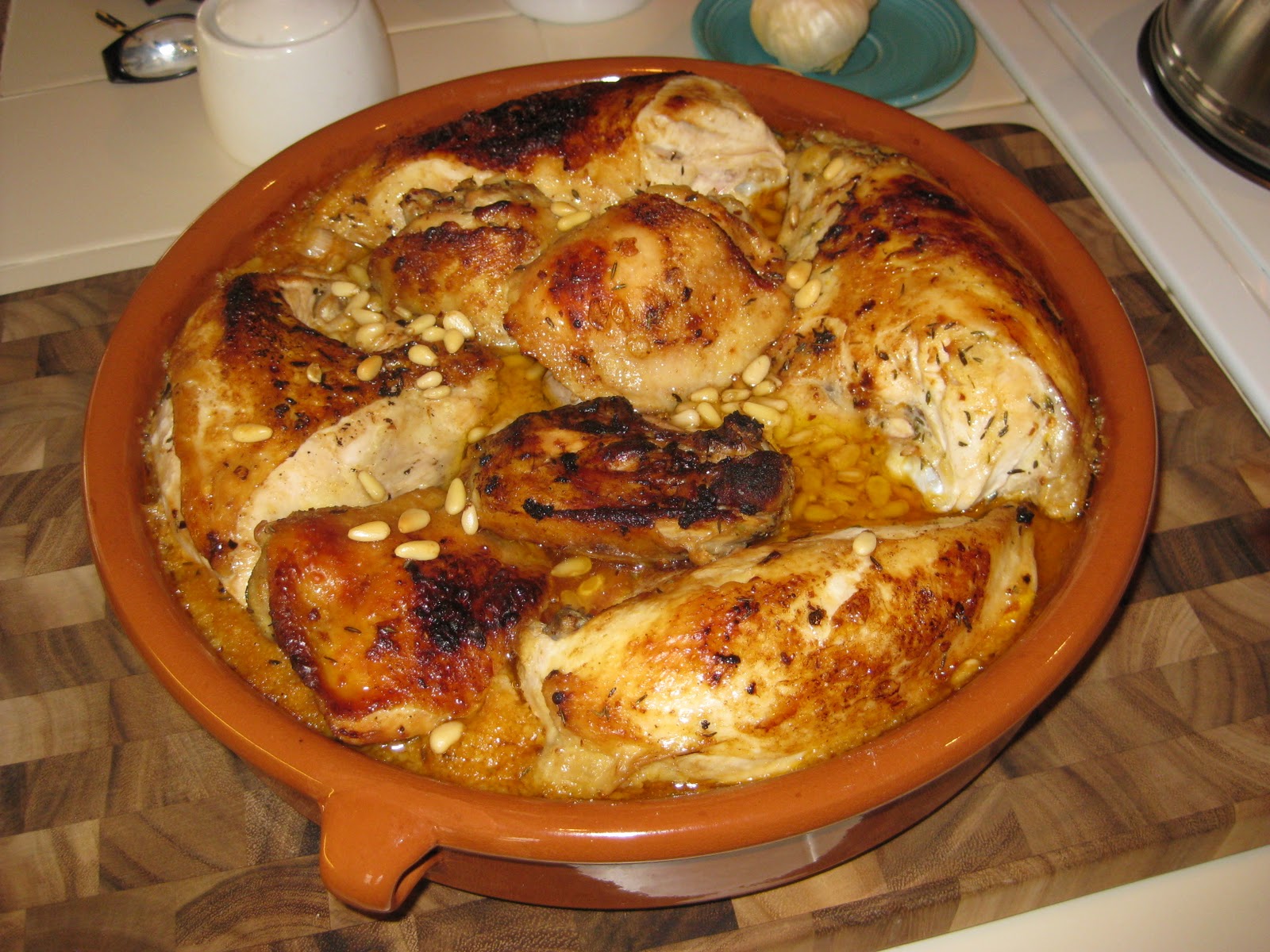
What's Cooking? Garlic Chicken and CousCous


In anticipation of the much acclaimed (and sad to say somewhat anticlimactic) rising of the Supermoon... and mostly because we don't get enough chances to visit..I invited my BFF's Jann, Melissa and Sue for dinner last night. We ended up with three teens in and out all evening too...the more the merrier...but good thing the recipe made a lot. Oh yes...the recipe! Adapted from Anne Burrell. It's time consuming...but not hard and the result? Your house smells like heaven and yes...it tastes scrumptious! Even the teens were loving it! Comfort food that is ready ahead of time so you can just be with your guests and have fun. I served it with a salad.


Garlic Chicken and Couscous


It takes some time to put this together, but if you do it ahead you can let it rest in the refrigerator and bake it an hour or so before dinner.


Ingredients: Chicken
                2 whole garlic bulbs, which you will roast whole.
                1 lemon, zested and juiced
                1 large bunch thyme, leaves only, or about two teaspoons dried if fresh isn't handy...
                1 teaspoon ground cumin
                Pinch crushed red pepper flakes
                Kosher salt
                Extra-virgin olive oil
                1 (4 to 5-pound) chicken, cut into 8 to 10 parts

Couscous:
                Kosher salt 
              1 package Couscous
                Extra-virgin olive oil
                1 large onion, sliced
                3 ribs celery, sliced thin on the bias
                Pinch crushed red pepper flakes
                1 1/2 cups dry white wine
                3 tablespoons tomato paste
                Large pinch saffron
                2 zucchini, green part only, cut into 1/2-inch dice
                2 to 3 cups chicken stock, plus one more cup reserved.

Optional pine nuts for garnish

Directions
Chicken:
Preheat the oven to 375 degrees F. Put the garlic bulbs in a small tin and roast them until they are soft when squeezed, about 30 minutes. Remove them from the oven and let cool.
When the garlic bulbs are cool, slice the tops off and squeeze out the roasted garlic. Add the garlic to a food processor or a bowl, along with the lemon zest, lemon juice, thyme, cumin, crushed red pepper and salt, to taste. Add a little olive oil and puree or mash into a loose paste. Massage the mixture all over the chicken pieces and let sit for at least 1 hour. This is important don't cut corners here. The flavor you will get is really outstanding!
Couscous: This is where I took the most liberty with my recipe...her version had you partially cooking the couscous in water and letting it finish in the oven...I cut corners and it was delicious...
Follow the package directions using chicken stock instead of water and prepare the couscous. over medium heat. After the couscous is done fluff it with a fork and set it aside.
Coat a large saute pan with olive oil over medium-high heat. Add the chicken to the pan and brown it on all sides. Remove it to a plate.

 Drain away most of the fat in the saute pan and saute the onions and celery. Season with salt, to taste, and the crushed red pepper. Deglaze with white wine, scraping up all the sticky bits on the bottom of the pan. Cook the onions and celery for 7 to 8 minutes. Stir in the tomato paste and cook for another 2 minutes. Add in the saffron, zucchini, cooked couscous, and a little of the chicken stock. Stir to combine, then taste and adjust seasoning, if needed. Transfer the mix to an ovenproof dish. I used my Cazuela for this..arrange the chicken, skin side up, in the couscous and add some more chicken stock to keep everything nice and moist. Sprinkle with pine nuts, if you like them and cover with foil. Place the baking dish on a sheet pan.
Roast the chicken for 30 minutes, covered, then remove the foil and roast for another 10 to 15 minutes.
Remove the chicken from the oven and serve.

Oh yes...you can have a Cazuela of your very own...order it from Amazon! They come in lots of different sizes..I used the big one....


Friday, March 18, 2011

Supermoon! Get Ready To Do Some Howling!

'Supermoon' Rises: Biggest Full Moon in 18 Years Occurs Saturday Night

The dazzling full moon sets behind the Very Large Telescope in Chile's Atacama Desert in this photo released June 7, 2010 by the European Southern Observatory. The moon appears larger than normal due to an optical illusion of perspective. Photo CREDIT: Gordon Gillet, ESO. 


Thanks to a fluke of orbital mechanics that brings the moon closer to Earth than that it has been in more than 18 years, the biggest full moon of 2011 will occur on Saturday, leading some observers to dub it a "supermoon."
On Saturday afternoon at 3 p.m. Eastern Daylight Time, the moon will arrive at its closest point to the Earth in 2011:  a distance of 221,565 miles (356,575 kilometers) away. And only 50 minutes earlier, the moon will officially be full.
At its peak, the supermoon of March may appear 14 percent larger and 30 percent brighter than lesser full moons (when the moon is at its farthest from Earth), weather permitting. Yet to the casual observer, it may be hard to tell the difference.

http://www.space.com/11163-supermoon-biggest-full-moon-2011.html